
July 14, 2020 | by Rachel Hoar
Lab-grown diamond – or earth-created diamond? Here’s all the data you need to live your best sparkling life.
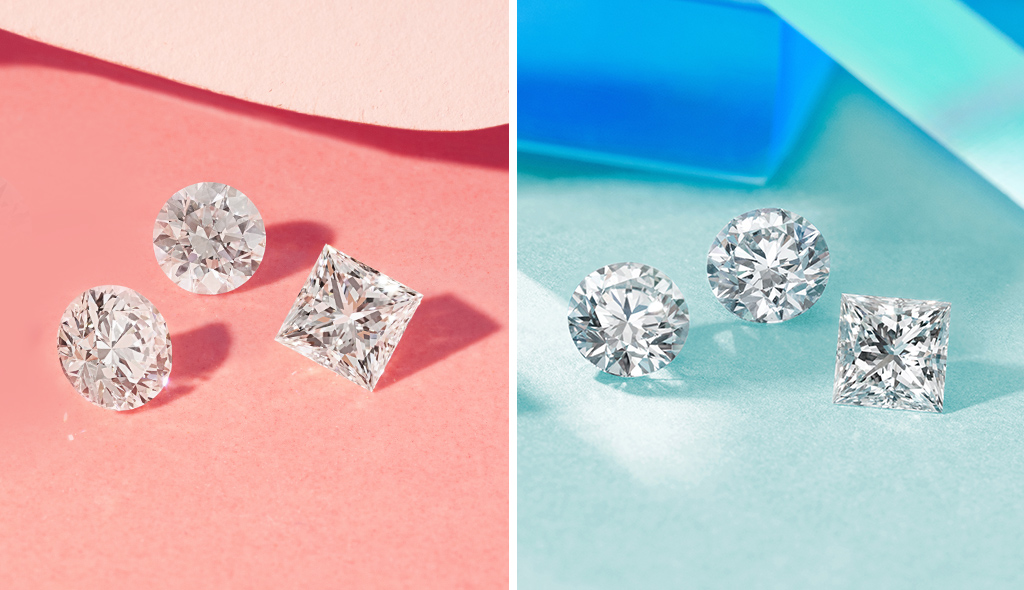
Lab-grown diamonds are pretty much the new kids on the jewelry block. So let’s clarify a few points, so you can decide with 100% confidence which sort of sparkle sets a twinkle in your eye: classic earth-created diamonds, or cutting-edge lab-grown diamonds.
The only difference between the two is their origin.
Earth-created diamonds: sourced from below the earth’s surface.
Lab-created diamonds: created in simulated “below-ground” conditions in a lab.
What’s a diamond? It’s just carbon atoms. But arrange them in a very particular structure, and you get the incredibly hard and beautiful stone we know and love. Producing this special carbon arrangement in nature demands conditions that are…intense. We’re talking high heat and super high pressure. Needless to say, very few places in the world are capable of producing earth-created diamonds.
But technology has advanced to the point that we don’t always have to go digging for our precious stones; we can actually simulate the necessary extreme conditions in specialized pressure chambers in a lab. Lab-created diamonds are grown from tiny carbon “seeds” that develop in these chambers over months, as incredibly hot gases deposit carbon atom-by-atom onto the original seed.
Lab-created diamonds even develop their own unique characteristics (inclusions, clarity, etc) along the way, and once they’re fully grown they’re cut into the shape that suits their qualities best.
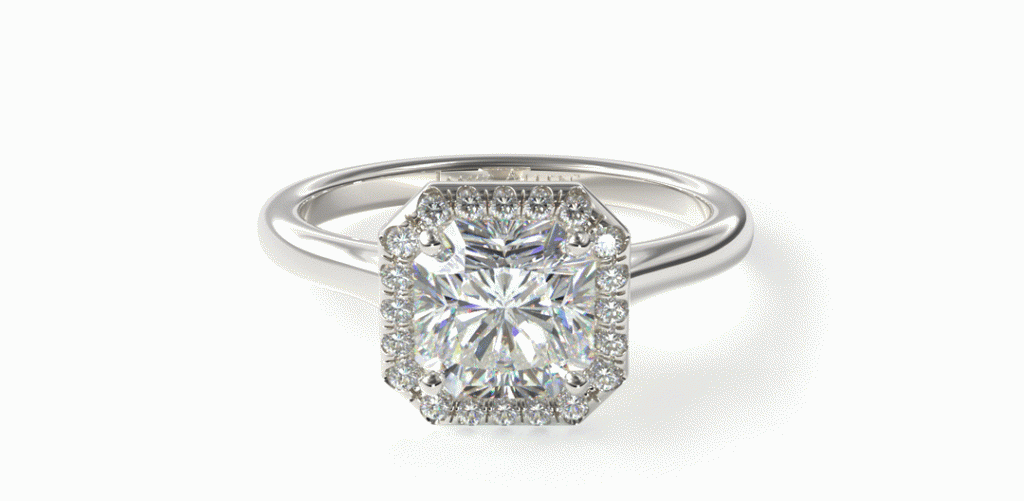
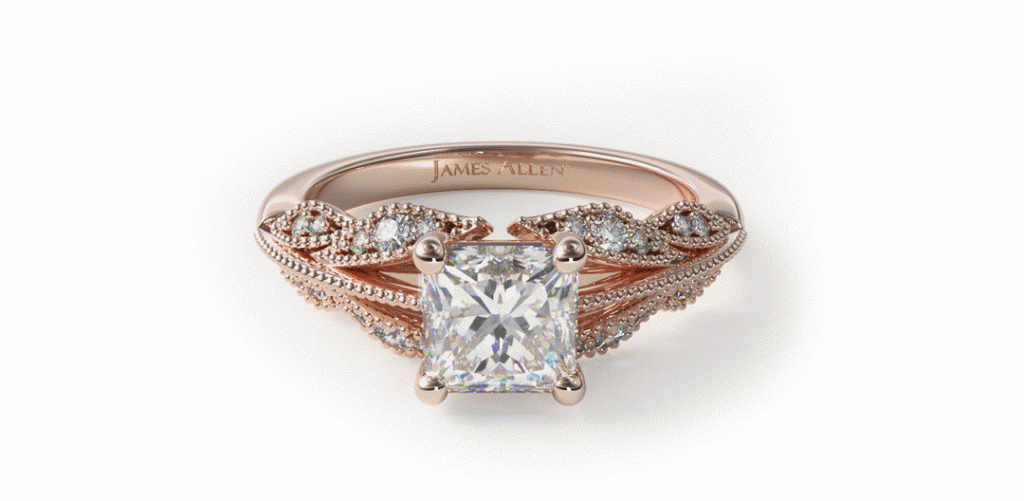
Lab-grown diamonds are generally about 30% more affordable than earth-created diamonds.
Why?
The diamond-growing process is less resource-intensive than the diamond-mining process. It simply costs less to grow a diamond in a lab than it does to mine a diamond from the earth, and those savings are passed along to diamond-shoppers. That means that for the same cost, you can purchase a lab-created diamond that’s 30% larger than an earth-created one.
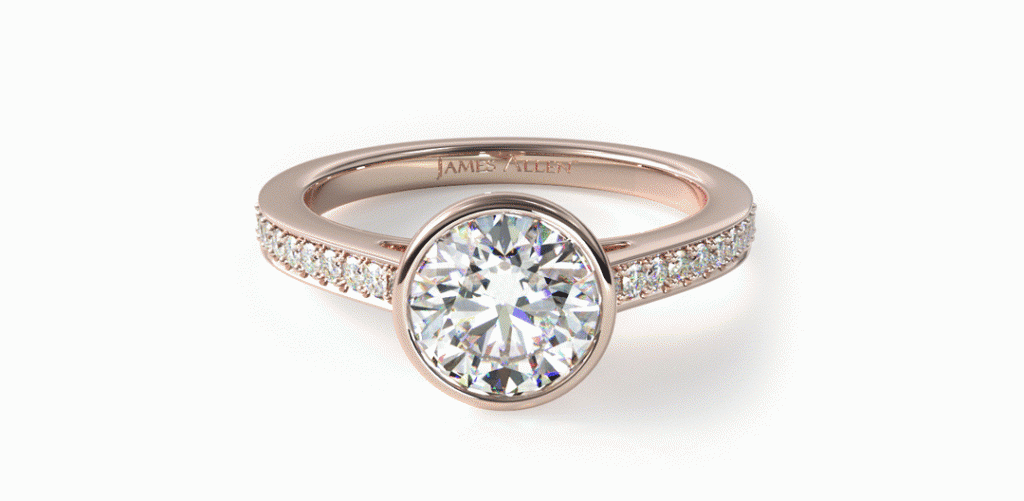
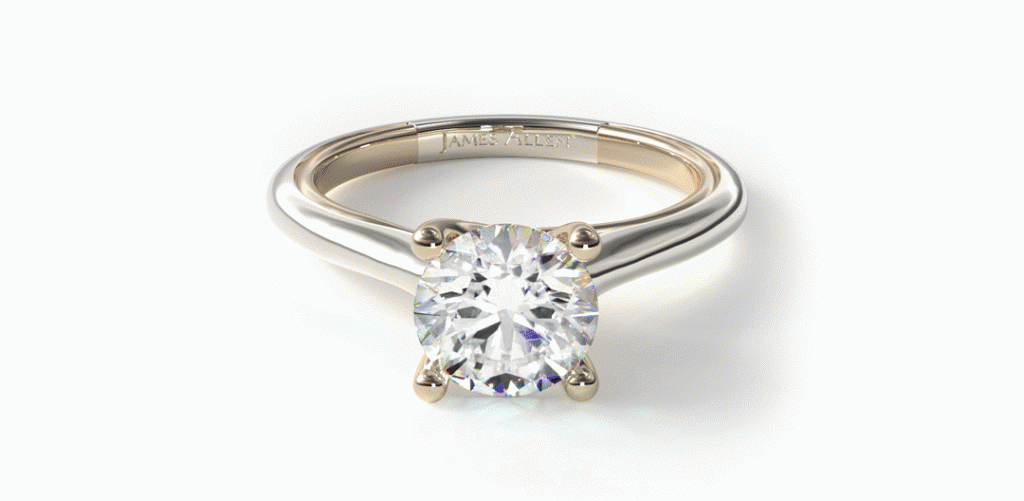
Earth-created diamonds are the classic choice. Lab-created diamonds are the fresh choice.
There is no doubt that earth-created diamonds contain millennia of history, tradition, and romance. They are one of nature’s most incredible products. Drawn from deep within the earth, these sparkling treasures have been proudly flaunted by generations upon generations – paving the way for you to carry on the tradition.
Lab-created diamonds, on the other hand, are the next step in diamond history. Technically speaking, they’re brand new. But traditionally speaking, diamonds are diamonds forever. Lab-created diamonds give their wearer a unique chance to create new memories.
Both earth-created diamonds AND lab-created diamonds hold their sparkle forever, so they’ll be just as beautiful when you’ll pass them on as heirlooms as they are when you wear them on a night out.
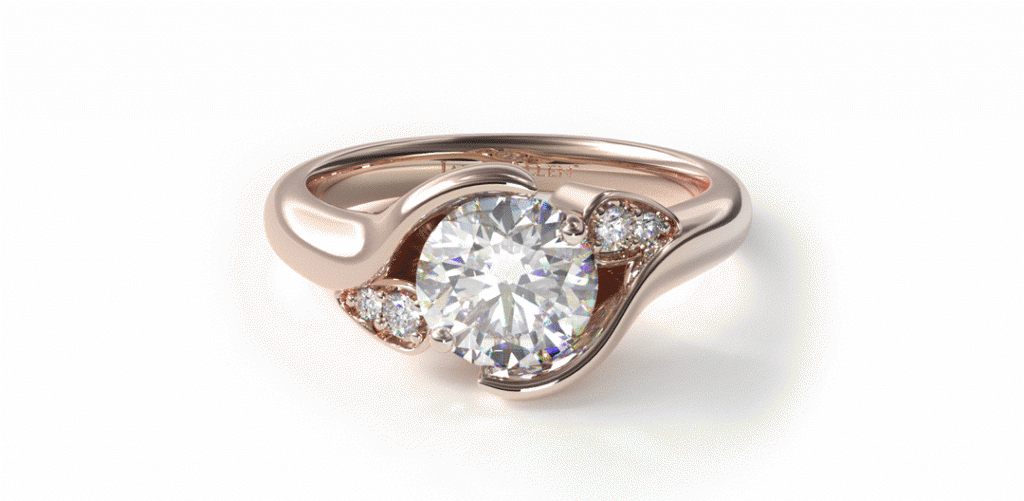
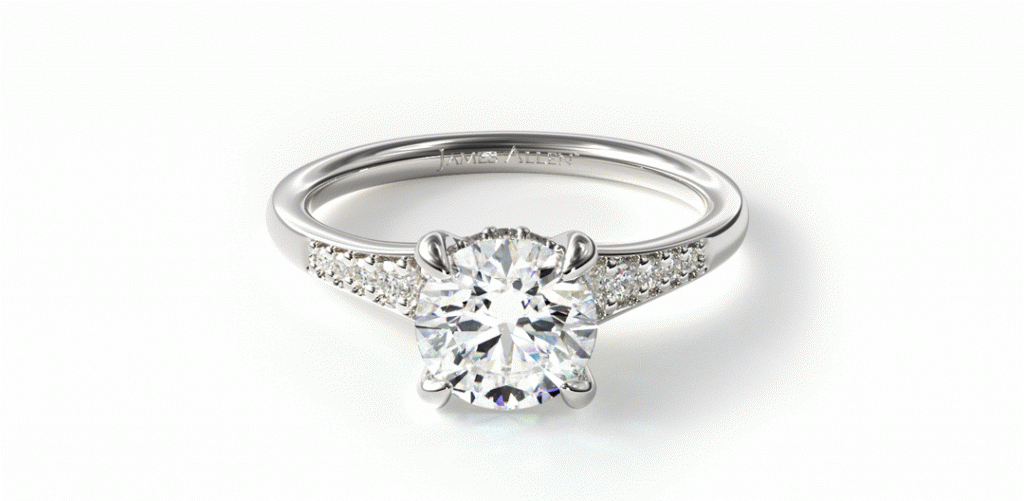
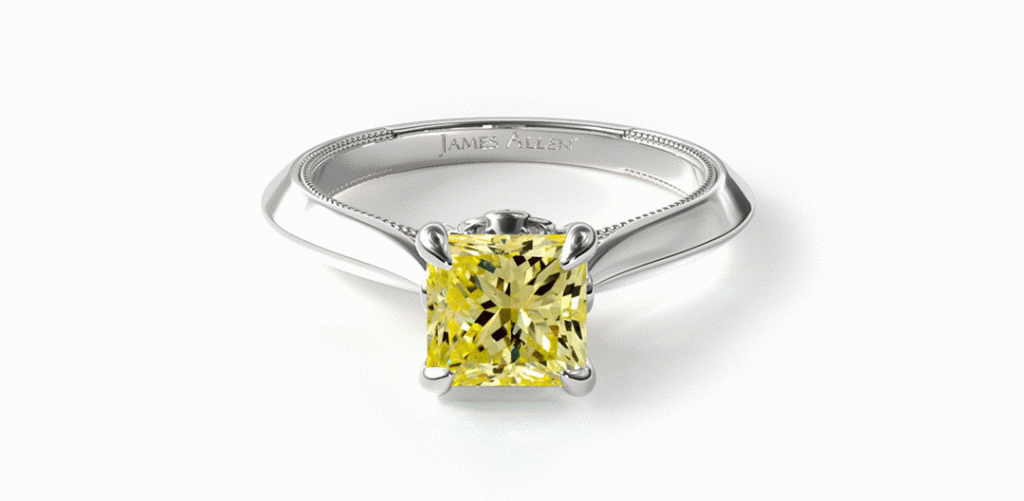
Both earth-created and lab-created diamonds are available in nearly every shape and color – even fancy colors!
Colorful diamonds, like canary yellow ones, are quite rare. Their shocking hues are caused by trace amounts of non-carbon elements, like nitrogen. By adding these elements to a growing diamond in its pressure chamber, lab-grown diamonds take on the same fancy colors as earth-created diamonds.
Good news: any diamond can be cut into any shape. When it comes to diamond cuts, you truly are spoiled for choice!
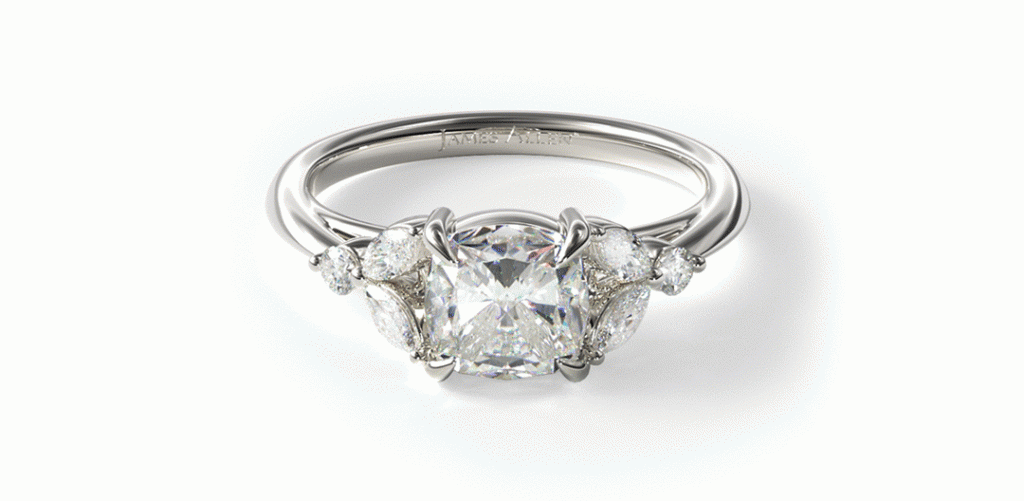
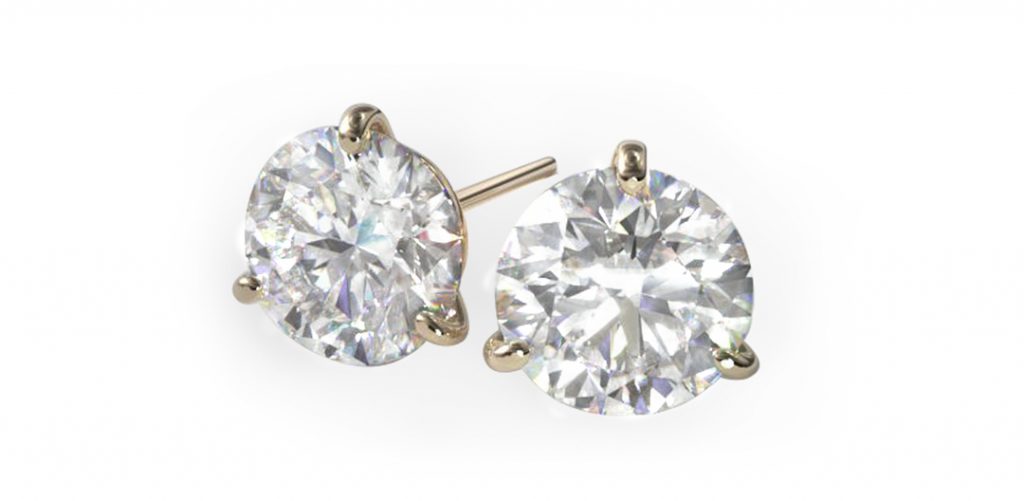
Diamonds aren’t only for rings. Have a look at the pendants and earrings that can be set with either earth-created or lab-grown diamonds:
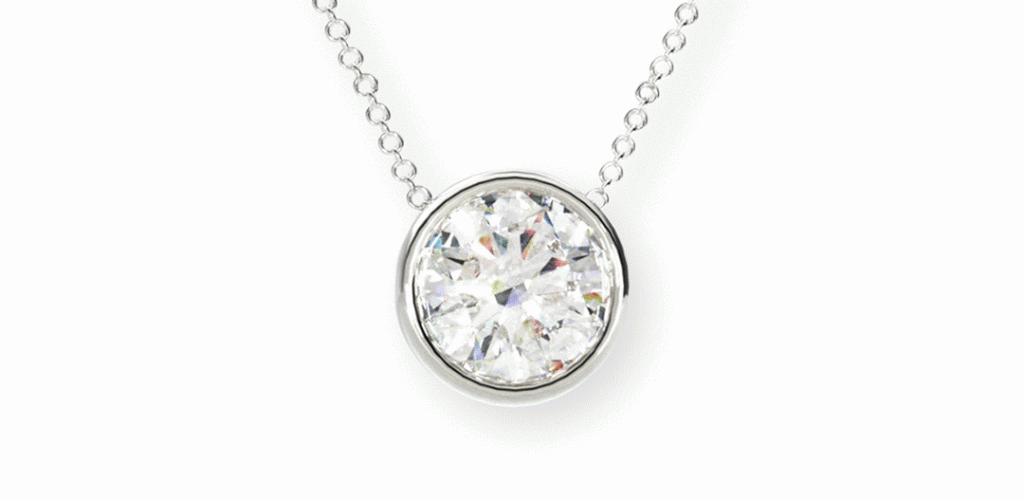
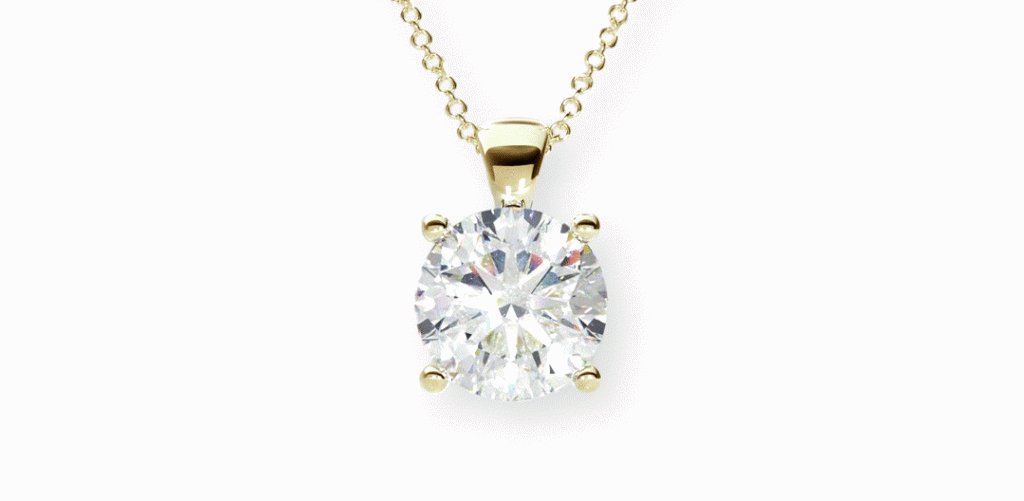
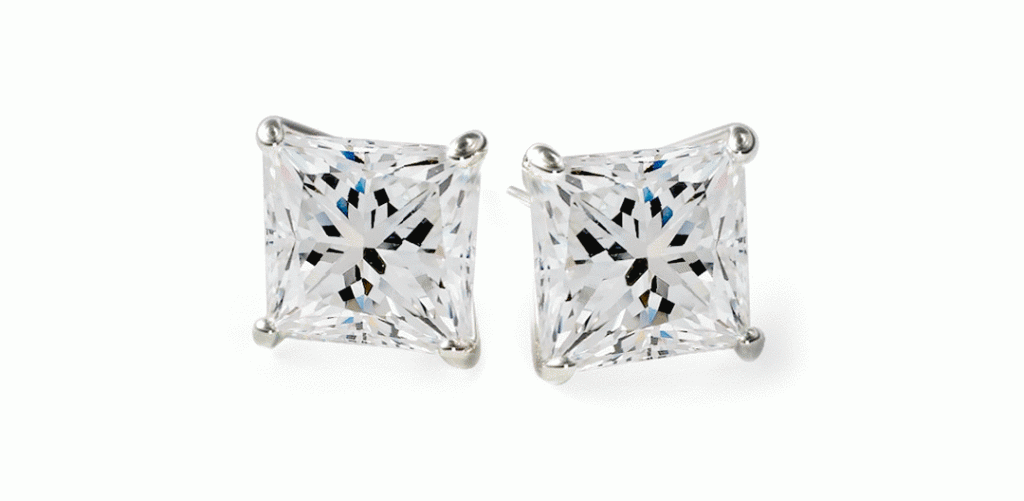
March 25, 2020
By Nicholas Del Re
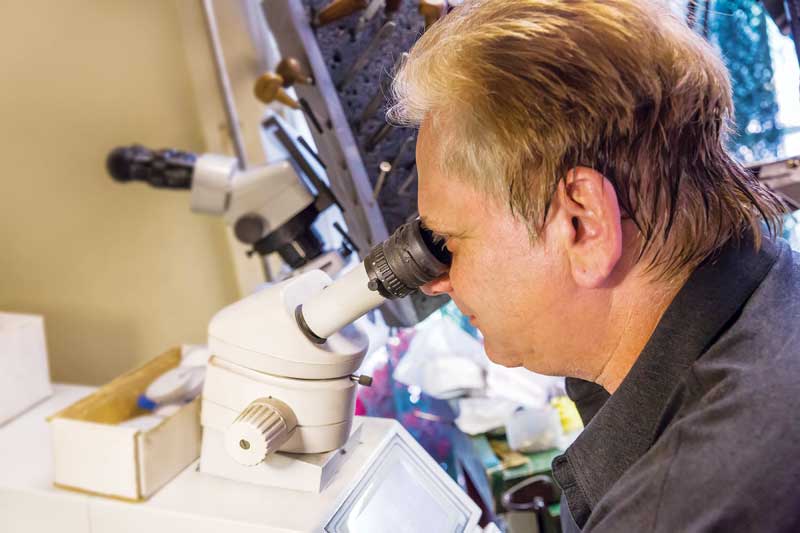
Laboratory-grown diamonds created through chemical vapour deposition (CVD) and high pressure, high temperature (HPHT) processes are grown by a number of manufacturers who specialize in this field.
As these gemstones continue to find their place on the market, it is becoming increasingly important for retailers, designers, and other jewellery professionals to have reliable methods of detecting CVD diamonds from those that are natural—especially when the gem-cut end product of CVD crystals is visually the same as those of their natural counterparts. Disclosing the true origin of growth for diamonds, whether natural or created in a laboratory, is necessary to maintaining trust with customers and clients.
Fortunately, if one knows what to look for, subtle differences are indeed present between these two types of diamonds. Whether loose or in jewellery, CVD and HPHT laboratory-grown diamonds are detected and separated through rigorous process at Gemological Science International’s (GSI’s) laboratories; the use of carefully selected instruments by experienced staff members generate visual and spectral information that allows for this detection and separation.
When it comes to differentiating CVD and HPHT laboratory-grown diamonds from those that are natural, one of the most certain methods of separation is done through a combination of visual observations and photoluminescence.
Visual observations are achieved by using an imaging instrument, known as the DiamondView, which brings out structural growth characteristics and differences, along with variances in colouration.
This involves placing a diamond in an enclosed chamber while it is exposed to high-energy ultraviolet (UV) rays. Among the reactions seen are two kinds of luminescence called fluorescence and phosphorescence.
To give one an idea of the lower to higher energies used to excite the diamond by UV light, these are respectively: longwave (LW), shortwave (SW), and DiamondView (DV), with the wavelengths in nanometres (nm) as follows:
LW=365nm SW=254nm DV≈225nm
Fluorescence is the luminescence seen while being excited by UV light, while phosphorescence is luminescence seen occurring after the excitation of the UV light is cut off.
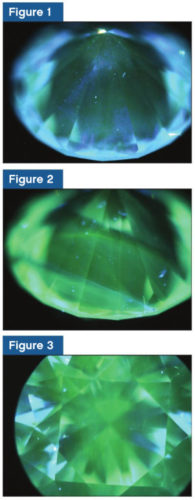
The telltale signs for differentiation of natural and laboratory-grown are from the colouration and appearance of structural features within the body of the diamond.
The other important test related to detecting and separating involves Raman instrumentation, which uses lasers that emit light at specific wavelengths. These are used to excite the internal atomic structure of the diamonds that, essentially, excite defects within the crystalline structure. This excitation results as photoluminescence; light emission from any form of matter after the absorption of energy, resulting in graphs that exhibit peaks which reflect the defects, and another peak that verifies it is a diamond. This, along aforementioned imaging, greatly helps one to differentiate natural diamonds from those that have been grown in a laboratory.
While performing these tests in GSI’s New York laboratory, researchers observed an unusual feature exhibited by a CVD laboratory-grown diamond.
The stone in question weighed more than two carats and was near colourless in full-spectrum daylight lighting. When placed in the DiamondView, the initial results were as expected for a laboratory-grown CVD diamond.
The resulting fluorescence exhibited a green to blue colouration (Figures 1 to 3). The different degree of colouration observed was the result of variable exposure to the UV it was subjected to. Also, the characteristic placement of colour in the structure seen was due to the growth process involved for CVD diamonds.
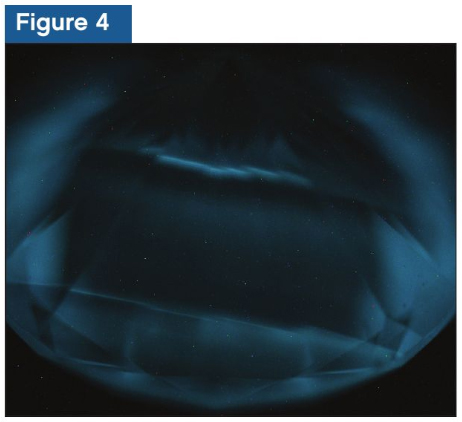
In addition to fluorescence, blue phosphorescence (Figure 4) was also observed.
These observations are fairly standard when viewing these diamonds under this condition; however, CVD diamonds can exhibit other phenomena under this or similar circumstances.
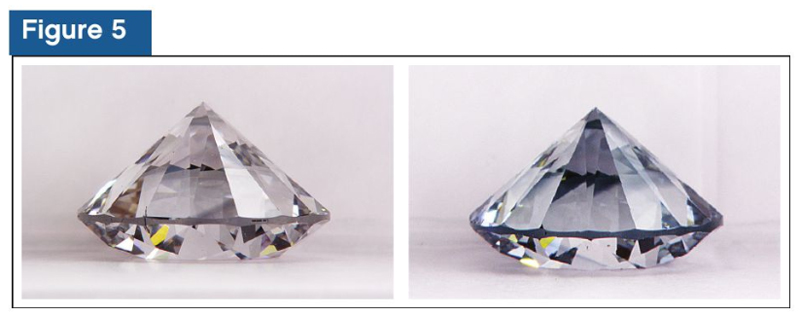
This brings us to a most interesting aspect of this particular CVD stone: it exhibited an unusual and dramatic change in colour after being taken out of the DiamondView instrument, going from near colourless to blue (Figure 5).
While the body colour of CVD diamonds is stable when viewed in daylight under normal conditions, it is known the colour may change if the conditions are altered (i.e. if the stone is exposed to UV light or heat). In these cases, however, the colour typically returns to its actual colour within 30 minutes to an hour of being in normal conditions and after direct exposure to full spectrum daylight lighting.
In regards to longwave and shortwave UV exposure, colour change is comparatively subtle, but becomes more dramatic as exposure and energy increase.
Although the colour of the CVD diamond reverts back to a normal stable colour, there are some caveats to be aware of. First off, while direct full spectrum lighting (e.g. a light box, preferably lacking or having minor UV radiation) would bring back the CVD diamond’s colour after about one hour, it would take two-and-a-half hours before this stone would start to return to its stable colour in an environment with standard ambient light conditions. (As a note: one should be mindful of the lighting environments that may vary in standard room-lit environments where gemstones are handled and viewed.)
The experiment continued once the colour changed to blue. The CVD stone was stored in parcel paper (read: a dark environment) for one week. When removed from the paper, it was discovered the stone was the same blue colour as it had been when placed in the paper. The research team was able to get the CVD diamond back to its original near colourlessness by exposing it to full spectrum daylight light box for about one hour.
Generally, diamonds created through CVD processes do not change to this extreme; still, most can exhibit subtler changes to varying degree. With this in mind, it is strongly recommended all laboratory-grown CVD diamonds be placed in a full spectrum light box for at least 30 minutes before attempting colour grading to ensure consistency with the colour grades given afterwards.
Although not the same, the occurrence is akin to one which happens in natural diamonds, classified as Chameleon. These Chameleon diamonds have unique colour-changing properties that make them desirable in the marketplace.
From a scientific (albeit simplified) viewpoint, the colour change observed is known as photochroism. This is a reversible transformation of a material’s colour due to exposure to electromagnetic rays, such as UV. (This is when the colour centres change its charge-state under optical illumination, such as UV.)
During this photochromic effect, basically, we have the electrons in defects within a CVD diamond being exposed to additional energy from a source as the UV. This causes the energy or charge state to change, which, in turn, affects the way colour is absorbed from the visible spectrum.
Returning to the noted change in this particular CVD diamond, we have defects from the silicon present in the growth process. This presence causes a complex of absorption peaks in the visible-to-near infrared region in the electromagnetic spectrum. The exposure to the energy of the UV causes a charge transfer in the silica vacancy centers that are present (one main vacancy centre is noted by the 737 nm absorption peak). While this is happening, it increases the absorption of the red in this region, causing the blue colouration to be seen. In addition to this being an occasional novelty for CVD diamonds, it may well find possible applications in quantum information processing.

Nicholas Del Re is chief information officer (CIO) of Gemological Science International (GSI). He has nearly four decades’ experience, working in research in research and gem identification departments of gemmological organizations, as well as serving in an R&D capacity with Industrial Diamonds. Del Re has presented at numerous functions within the jewellery industry, including the NY Mineral Club, where he has held office as secretary for many years. He can be reached via email at nickd@gemscience.net.
The new J-Mini is designed for over-the-counter ease of use while J-Detect 9000 is made for larger applications
By: Diamond World News Service|Sep 13 2019 10:39AM|Reference: 22485
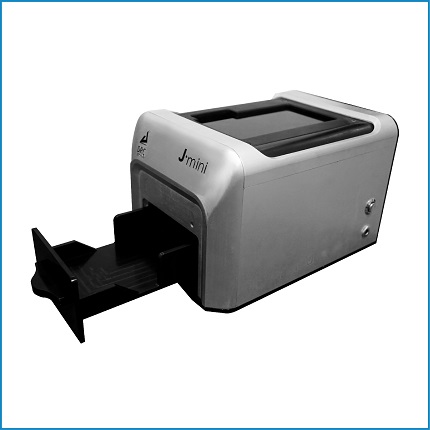
DRC Techno, a company focused on diamond identification technology, announced the introduction of two new instruments designed to identify laboratory grown CVD and HPHT diamonds. Their J-Mini and J-Detect 9000 devices offer different features and price points to supplement their globally recognized J-Smart Pro machine.
DRC Techno has recently discovered new challenging lab grown diamond variations. Their new instruments and updates available to existing customers’ instruments are tuned for greater detection capabilities in the evolving diamond marketplace. Having more than 100 associates in research, development and production of proprietary technology. With more than 800 major installations in 28 countries, the company is dedicated to identification of undisclosed laboratory grown diamonds.
DRC’s current technology developments address the concerns of the jewelry industry in scanning loose diamonds or those mounted in jewelry from 0.003 carat of any shape with colors from D through K. Diamond identification from production sources to the retailers is now essential at every level. The new J-Mini is designed for over-the-counter ease of use while J-Detect 9000 is made for larger applications. Both machines are designed for the user to make identification conclusions based on phosphorescent and photoluminescent properties of the diamonds. In addition to new launches, DRC also announce major software upgrade in J-Smart Pro, which in addition to loose diamonds, scans mounted jewelry: up to 36 rings at once, pendants, earrings, bangle bracelets or eternity rings. J-Smart is already in use at leading retail jewelers, manufacturers of diamonds and jewelry, as well as laboratories and wholesalers.
“This is critical to our industry today,” said VipulSutariya, director of the company. “Our technology finds undisclosed lab grown diamonds at every stage of the diamond distribution pipeline from diamond companies and jewelry manufacturers to the finest retailers. We find them almost everywhere we test,” he said. “Our sample database now has increased considerably compared to any other similar service providers, which helps us to analyze each stone that is scanned.”
“Our industry is built on trust” Sutariya said. “Every business at every level needs to protect themselves and their customers from undisclosed laboratory grown diamonds. Every diamond that is not identified accurately is a problem for the next person in the chain of custody. While no one is perfect DRC Techno research is working at improving every day and we stand ready to assist our customers with 24-hour support.”
Follow DiamondWorld on Instagram: @diamondworldnet
Follow DiamondWorld on Twitter: @diamondworldnet
Follow DiamondWorld on Facebook: @diamondworldnet
TNN | Jul 2, 2020, 04:00 IST
Surat: After adorning the women across the world with the sparkling diamonds, diamantaires in the world’s largest diamond cutting and polishing centre in Surat will now save the lives of the critical Covid-19 patients.
One of the world’s leading diamond companies, Dharmanandan Diamonds Private Limited through its research and development (R&D) companies—DRC Techno and InnovSeed— has invented turbine technology-based compact ventilator with features at par with global specifications under the Atmanirbhar Bharat Abhiyan of Prime Minister Narendra Modi.
The ventilator has been certified by the International Electrotechnical Commission (IEC) and it will be supplied to the hospitals in Gujarat, Kerala, Maharashtra and Delhi starting August.
Vipul Sutariya, director of Dharmanandan Diamonds said, “It took five months for us to develop the low-cost ventilator with all advance features available in any imported ventilators. This ventilator has been developed under the supervision of medical experts.”
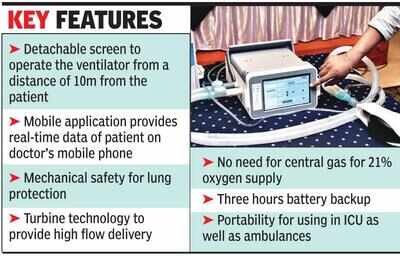
About the key features, Sutariya said that the 8.1 inch monitor on the ventilator is detachable and the doctors can operate the ventilator from a distance of 10 meters. Also, it has a mobile application that can sent data on patient’s vitals to the doctor’s phone in real time.
Sutariya added, “We are getting inquiries from Kerala government, Pune and many private hospitals for the supply of the ventilators. Five units have been given in government hospitals in Gujarat for final review of the doctors over its functioning.”
The company has the capacity to manufacture 500 units per day which can be scaled to 2,000 units per day if required.
According to the company, the compact ventilator weighs about 3kg and costs Rs 2.50 lakh.
Key features
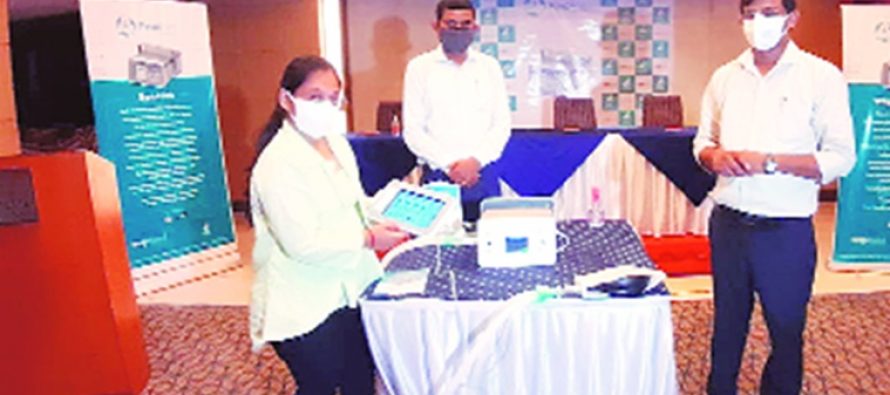
Giving details of the newly-developed ventilator, Director of DRC Techno company Vipul Sutariya said, “Respiwin is a low-cost ventilator which has been developed by 15 engineers coming from different engineering fields working in InnovSeed and DRC
Dharmanandan Research Centre (DRC) Techno and InnovSeed company, subsidiary firms of Dharmanandan diamonds in Surat, manufactured a low-cost ventilator named Respiwin. DRC Techno is originally into manufacturing of machines used in the diamond industry including Lab grown diamond detection gadgets.
The ventilator, priced at Rs 2.5 lakh, was launched in the market on Wednesday.
Giving details of the newly-developed ventilator, Director of DRC Techno company Vipul Sutariya said, “Respiwin is a low-cost ventilator which has been developed by 15 engineers coming from different engineering fields working in InnovSeed and DRC. This products contains well-developed features with eight different modes for breathing required by patients. We have got the ventilator approved certificates by Electronics and Quality Development Centre (EQDC) in Gandhinagar and Calibration and Certification from Godrej & Boyce, Mumbai — both approved laboratories of NABL.”
Joint director of InnovSeed Mayur Chovatiya said, “The ventilator machine has wireless display which can be extended upto 10 meters. It can be operated without going near the patients. … This ventilator can use 21 per cent of oxygen from atmosphere and supply it to the patient… The ventilator is a battery-operated machine .”
Another director Rashmi Solanki said, “We have started working on the ventilator after first Covid-19 case was reported in Surat. Till now we have made three prototypes and this is fourth one, and we have taken help from the medical fraternity doctors while developing the machine. We have fulfilled all the criteria laid by government.”
Courtesy: Indian Express
ANI | Updated: Jul 16, 2020 15:22 IST
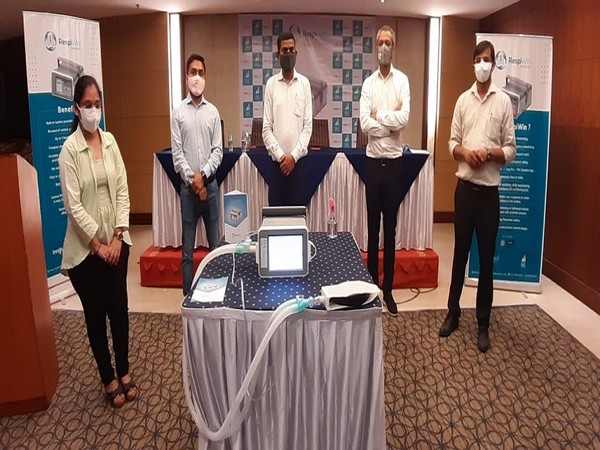
Surat (Gujarat) [India] July 16 (ANI/News Wire India): Surat’s company developed a low-cost ventilator, which is high quality, after getting inspired by Aatmanirbhar Bharat Abhiyan. The ventilator has the same features as that in the ventilators which are made by other International companies.
Due to the ongoing corona pandemic, there have been various changes in the lifestyles as well as the thinking process of the people. This has also paved a way for new opportunities for some people.
Prime Minister of India, Narendra Modi made an announcement for the people of the country to become Aatmanirbhar i.e. self-sufficient.
Taking inspiration from the Aatmanirbhar Bharat Abhiyan and to tackle this difficult situation of coronavirus, Surat’s two companies-DRC Techno and InnovSeed, have developed a high-quality ventilator at a low cost, under Make in India.
“This ventilator is a very highly developed ventilator, developed at a low cost, which has all the features which an International companies’ ventilator possesses. We will continue to take on new innovations in the future as well so that the ventilators can be easily made available to the needy. We have got this ventilator certified from NABL approved labs. Our aim is to make the ventilators available to every small and big hospital in the country. We are also planning to develop other medical equipment under ‘Make in India‘,” said Vipul Sutariya – Director of the company.
Please visit our website – www.respiwin.com
This story is provided by News Wire India. ANI will not be responsible in any way for the content of this article. (ANI/News Wire India)
By: Express News Service | Surat | July 2, 2020 5:56:13 am
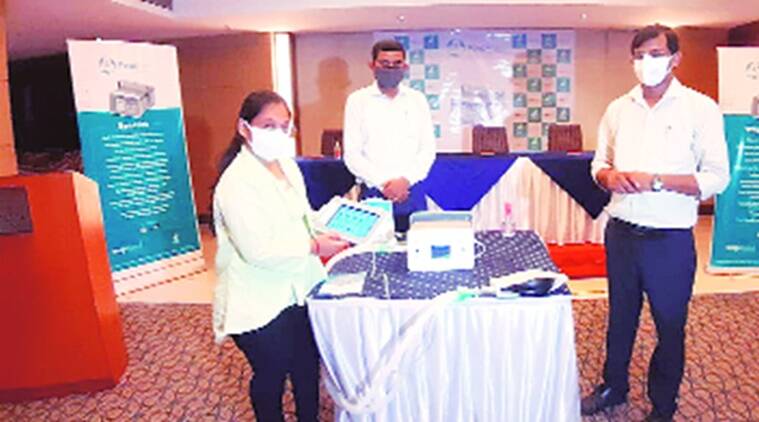
Dharmanandan Research Centre (DRC) Techno and InnovSeed company, subsidiary firms of Dharmanandan diamonds in Surat, manufactured a low-cost ventilator named Respiwin. DRC Techno is originally into manufacturing of machines used in the diamond industry including Lab grown diamond detection gadgets.
The ventilator, priced at Rs 2.5 lakh, was launched in the market on Wednesday.
Giving details of the newly-developed ventilator, Director of DRC Techno company Vipul Sutariya said, “Respiwin is a low-cost ventilator which has been developed by 15 engineers coming from different engineering fields working in InnovSeed and DRC. This products contains well-developed features with eight different modes for breathing required by patients. We have got the ventilator approved certificates by Electronics and Quality Development Centre (EQDC) in Gandhinagar and Calibration and Certification from Godrej & Boyce, Mumbai — both approved laboratories of NABL.”
Joint director of InnovSeed Mayur Chovatiya said, “The ventilator machine has wireless display which can be extended upto 10 meters. It can be operated without going near the patients. … This ventilator can use 21 per cent of oxygen from atmosphere and supply it to the patient… The ventilator is a battery-operated machine .”
Another director Rashmi Solanki said, “We have started working on the ventilator after first Covid-19 case was reported in Surat. Till now we have made three prototypes and this is fourth one, and we have taken help from the medical fraternity doctors while developing the machine. We have fulfilled all the criteria laid by government.”
DRC Techno understood and realized the need of the hour to provide an uncomplicated solution to meet customer’s deep need of safeguarding their respective merchandise and brand image in the most convenient and cost-effective manner
By: Diamond World News Service|Jan 20 2020 12:41PM|Reference: 24706
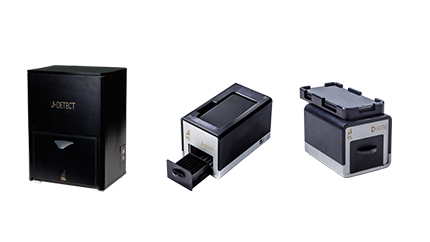
For the first time in the history of lab-grown diamond detection industry, DRC Techno is proudly introducing three new revolutionary automatic (objective type) series of lab-grown (CVD/HPHT) diamond detectors with the equivalent capabilities of our most refined and automatic detector developed till date for high capacity analysis; The J Smart Pro.
Yes, you heard it right. No more ‘Maybe’, only ‘Yes’ or ‘No’.
Gone are the days of manual (subjective type) result interpretation, where the human judgement might lead to an error in interpreting the lab-grown diamond detection results. Followed by rigorous research, customer surveys and product/market fit; to identify the genuine pain points of all members in the natural diamond & diamond Jewellery supply chain. DRC Techno understood and realized the need of the hour to provide an uncomplicated solution to meet customer’s deep need of safeguarding their respective merchandise and brand image in the most convenient and cost-effective manner; because of the ever increasing global threat of the undisclosed lab-grown diamonds entering the natural diamonds supply chain.
Now, with the unmatched state of the art technology from DRC Techno, every lab-grown diamond (loose or mounted) can be detected accurately, at each stage of a diamond journey.
Follow DiamondWorld on Instagram: @diamondworldnet
Follow DiamondWorld on Twitter: @diamondworldnet
Follow DiamondWorld on Facebook: @diamondworldnet
The innovative machine not only identifies Lab grown diamond but also identifies the Type IIa CVD diamonds.
By: Diamond World News Service|Sep 11 2015 6:45PM|Reference: 11915
Lately Indian diamond industry has been grappling with the rising threat of Lab grown diamond (CVD and HPHT). Though, there has been constant research work going on to come up with innovative technologies to identify these type diamonds better, the identification process is still a laborious task. As CVD diamonds have same physical, chemical and optical properties as an earth-mined diamond, identification process becomes even more difficult. Also, the growing threat of CVD diamonds has led to customers losing interest in diamonds.
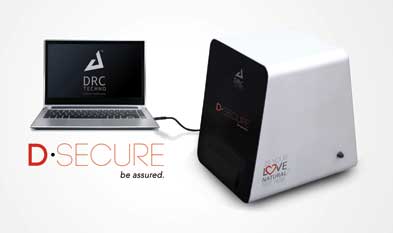
Dharmanandan Research Centre’s (DRC Techno) ‘D-Secure’ can prove to be a boon for the diamond industry as this wonder not only can identify Lab grown diamond in various sizes but also can detect Type IIa Lab grown diamond. D-Secure can recognise laboratorial diamonds both in polished as well as rough plus. It detects all sizes from 0.003 carats (+0000 sieve size) to 10 carats of colourless or near to colourless diamonds. Besides, detection of bigger than 10 carats is also possible with some mechanical add-ons. Apart from this, the machine can detect Lab grown diamond in studded jewellery as well.
Commenting on the launch Vipul Sutariya Director DRC Techno “After deep research & years of hard work of, technical team at DRC developed this device to counter rising problem of adulteration by man-made diamonds in business.”
The new instrument, unlike existing devices, is capable of identifying Lab grown diamond from a batch directly and hence saves significant time. Moreover, the results so pulled off are precise and require no further assessment. The process doesn’t take more than 50 seconds. However, identification time depends on the amount of goods being checked.
“D-Secure” is said to be the most accurate Lab grown diamond identifier till date. Not only this, the instrument would come at a cheaper price as compared to the expensive instruments available in the market. However, Vipul Sutariya refused to divulge the expected price of the instrument.
The instrument has already created quite a buzz in the industry and a number of diamond traders/brokers had queued up for the demo. Diamond World had a firsthand experience to witness the diamond identification process. The process is certainly faster and hassle free.
“Purpose of this development is to uphold consumer confidence and keep natural diamond business safe from dumping of artificial diamonds and finding those undisclosed Lab grown diamond in cost effective manner.” stated Sutariya.
Follow DiamondWorld on Instagram: @diamondworldnet
Follow DiamondWorld on Twitter: @diamondworldnet
Follow DiamondWorld on Facebook: @diamondworldnet

Mumbai: Dharmanandan Research Centre (DRC) has introduced its new instrument to identify lab-grown diamonds. Called D-Secure, the device recognizes all shapes of lab-grown diamonds in sizes ranging from 0.003 carats to 10 carats.
“The technical team at DRC developed this device to counter the rising problem” of man-made diamonds in the diamond business, said DRC director Vipul Sutariya.
The new instrument, unlike existing devices, is capable of identifying Lab grown diamond directly from a batch, saving a significant amount of time. The precision of the results require no further assessment. The unit can also recognize both rough and polished stones, and can test and verify pre-mounted jewelry.
“The purpose of this development is to uphold consumer confidence and keep natural diamond business safe from dumping of artificial diamonds and finding those undisclosed Lab grown diamond in cost-effective manner.”